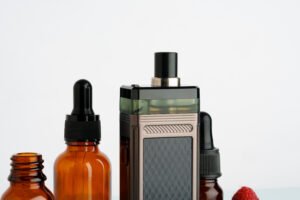
Understanding vaping laws in Canada requires looking beyond federal regulations. Although the federal government establishes national requirements for vaping products, provinces can introduce additional rules governing retail sales, product flavours, packaging, displays, and access to vaping products.
Ontario and British Columbia illustrate how these different regulatory approaches can affect the same product. A particular e-liquid, disposable vape, or refillable pod product may be subject to different retail conditions depending on where it is sold and the type of store offering it.
For consumers, retailers, and businesses operating across provincial borders, understanding these differences is essential to interpreting product availability and retail requirements accurately.
1. How Federal and Provincial Vaping Laws Work Together
Federal legislation provides the foundation for vaping laws in Canada. The Tobacco and Vaping Products Act regulates areas such as the manufacture, sale, labelling, and promotion of vaping products. Federal regulations also establish requirements concerning nicotine concentration, packaging, and product information.
Provincial governments can introduce additional requirements within their jurisdictions. These may cover retail displays, flavour restrictions, age verification, store classifications, and where vaping products may be sold or used.
Consequently, meeting federal requirements does not automatically mean that a product can be sold under identical conditions in every province.
For example, a product may meet the federal nicotine concentration limit but still be subject to provincial restrictions based on its flavour, container size, or the type of retail premises offering it.
This layered system explains why businesses need to assess both federal rules and the applicable provincial legislation.
2. How Ontario Regulates Vape Retailers
Ontario regulates the retail sale of vaping products primarily through the Smoke-Free Ontario Act, 2017, and its associated regulations.
The province distinguishes between ordinary retail establishments and registered specialty vape stores for certain sales, display, and promotional requirements.
Ontario generally prohibits the sale of vaping products to anyone under 19 years of age. Retailers must also follow identification requirements, prescribed signage rules, and restrictions governing the display and promotion of vaping products.
Flavour restrictions are another important consideration. In retail establishments that are not specialty vape stores or licensed cannabis retail stores, the sale of flavoured vaping products is restricted, with specified exceptions for flavours such as menthol, mint, and tobacco.
Specialty vape stores operate under separate conditions and must meet the applicable requirements to qualify for those exceptions. Their displays and promotions are also subject to specific restrictions.
Therefore, the same e-liquid or disposable vape may be treated differently depending on the type of store selling it in Ontario.
3. How British Columbia Approaches Vape Retail Sales
British Columbia has its own regulatory framework, including the Tobacco and Vapour Products Control Act, the Tobacco and Vapour Products Control Regulation, and the E-Substances Regulation.
These rules address product sales, retail displays, promotion, packaging, nicotine concentration, container volume, and flavour availability.
British Columbia generally sets the minimum legal purchase age for vaping products at 19. Its E-Substances Regulation also limits the nicotine concentration of restricted e-substances to 20 mg/mL and establishes specific capacity limits for certain products.
One particularly important distinction concerns the type of retail premises.
In age-restricted stores where minors are not permitted, certain flavoured e-substances may be sold, subject to applicable restrictions. In stores where minors are permitted, the sale of restricted flavoured e-substances is generally prohibited, with tobacco flavour treated differently under the regulations.
British Columbia also has notification and reporting requirements for businesses selling specified e-substances.
These rules mean that a product’s eligibility for sale depends not only on its formulation but also on the retail premises and the applicable provincial requirements.
4. Why Flavour Restrictions Can Change Product Availability
Flavour regulations provide a clear example of why the same vape product can face different retail conditions across provinces.
Consider a hypothetical fruit-flavoured e-liquid that meets applicable federal product requirements. Its availability may still depend on provincial rules governing flavoured vaping products and the type of retailer offering it.
In Ontario, certain flavoured products may be sold through qualifying specialty vape stores under the relevant provincial framework, while restrictions apply to many other retail establishments.
In British Columbia, flavour availability is linked to the distinction between age-restricted and all-ages sales premises, alongside the requirements of the E-Substances Regulation.
This means that retailers cannot determine whether a product may be sold simply by checking its flavour name or confirming that it meets federal requirements. They must also establish whether the product is permitted in the particular province and retail setting.
Because regulations can change, current government guidance should be checked before making decisions about product listings or availability.
5. Product Capacity, Nicotine Concentration, and Labelling
Product specifications are another important part of vaping laws in Canada.
Federal regulations establish a maximum nicotine concentration of 20 mg/mL for vaping products manufactured or imported for sale in Canada. Product packaging must also meet applicable labelling and warning requirements.
British Columbia adds specific requirements concerning the volume of certain products. Its regulations establish maximum capacities of 30 mL for containers holding restricted e-substances intended for refilling cartridges and 2 mL for cartridges holding or packaged with restricted e-substances.
These provincial requirements illustrate why a retailer must consider more than a product’s brand, flavour, or nicotine strength.
When reviewing a product, businesses should confirm the exact formulation, nicotine concentration, container or cartridge volume, packaging information, and applicable provincial restrictions. The relevant requirements depend on the product category and the legislation in force.
6. Retail Displays, Advertising, and Store Classification
Retail display and promotion rules can also affect how vaping products are presented to customers.
Ontario applies restrictions to the visibility, handling, and promotion of vaping products, with specific exceptions for qualifying specialty vape stores and licensed cannabis retail stores.
British Columbia has separate restrictions governing product displays and promotions, including requirements designed to limit the visibility and accessibility of vaping products to minors. Its store classifications also determine which products may be sold under particular conditions.
These differences matter to retailers planning store layouts, product displays, promotional materials, and customer access.
A business operating in both provinces should not assume that a display arrangement or product-promotion practice permitted in one jurisdiction is automatically permitted in the other.
The appropriate approach is to review the specific provincial requirements and determine which rules apply to each retail location.
7. What Online Vape Retailers Need to Consider
Online retail introduces additional questions because businesses may serve customers in more than one province.
Retailers should establish which requirements apply to their business operations, product listings, advertising, shipping arrangements, and destination markets. They should also verify whether specific products can legally be offered in the province where the customer is located.
Product pages should accurately describe the product and its specifications. Internal inventory systems can also help businesses distinguish between products that have different regional requirements.
Retailers should review age-verification procedures, applicable advertising restrictions, and carrier policies as part of their compliance process. Federal and provincial requirements should be considered together rather than treated as separate, unrelated obligations.
About Abc Vape
Abc Vape is a Canadian online vape shop offering products across categories including vapes, e-cigarettes, e-liquids, disposable devices, pods, and accessories. Its listed brands include Allo, STLTH, Rocky Vapor, SMOK, and OXBAR. The retailer also advertises free delivery on qualifying orders above $100, subject to its current terms and conditions.
For consumers researching vaping products in Canada, Abc Vape’s product categories provide a reference point for understanding the range of devices and e-liquids available through online retail. Product availability remains subject to applicable federal and provincial requirements.
Conclusion
The same vape product can be subject to different retail rules in Ontario and British Columbia because federal legislation establishes national requirements while provincial laws introduce additional conditions.
Differences in flavour restrictions, store classifications, product capacity, displays, and retail reporting requirements can influence where and how a product may be sold.
Anyone researching vaping laws in Canada should verify the current rules for the specific province, product, and retail setting involved. Consulting official provincial and federal sources helps consumers and businesses understand these differences and make better-informed decisions.