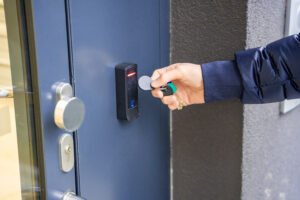
A condo fob is a small electronic access device used by residents to enter secured areas of a condominium building. Instead of using a traditional metal key, residents can present a fob to an electronic reader installed at an entrance, elevator, parking area, or other controlled access point. The system reads the information associated with the fob and determines whether access should be granted.
Understanding how a condo fob works can help residents, landlords, tenants, and property managers better understand building access, fob replacement, and everyday security procedures.
What Is a Condo Fob?
A condo fob is an electronic credential assigned to a resident or authorized building user. It usually contains a small RFID, NFC, or similar electronic component that communicates with an access-control reader.
The fob itself generally does not unlock a door through a traditional mechanical mechanism. Instead, it communicates with the building’s electronic access system. When the fob is presented near a compatible reader, the system identifies the credential and checks its access permissions.
Depending on the building, a condo fob may provide access to the main entrance, residential floors, elevators, parking garages, storage areas, amenity rooms, or other shared spaces.
How Does a Condo Fob Communicate With a Reader?
The process begins when a resident brings the condo fob close to an electronic reader. The reader detects the fob and obtains its identification information.
The access-control system then checks whether that particular credential is authorized for the selected entry point. If the permissions match the location and current access rules, the system signals the door, gate, or elevator to provide access.
Many electronic fobs operate without a conventional battery because the reader can provide the small amount of energy needed for communication. Other access devices may use different technologies or designs depending on the building’s security system.
This process usually takes only a fraction of a second, allowing residents to move through controlled entrances conveniently.
What Information Is Associated With a Condo Fob?
A condo fob is typically associated with an access credential stored within the building’s access-control system. The credential may be linked to a particular resident, unit, tenant, employee, or authorized user.
Property managers or authorized administrators can assign permissions to individual credentials. For example, one condo fob might provide access to the building entrance and parking garage, while another may have access to additional facilities.
The exact information and technology vary between buildings. Some systems use a unique credential number, while more advanced systems can incorporate encrypted communication and additional security features.
Where Are Condo Fobs Commonly Used?
A condo fob can be used at several locations within a building or residential complex. Common access points include:
- Main building entrances
- Side and rear entrances
- Parking garages
- Elevator controls
- Amenity rooms
- Fitness facilities
- Storage areas
- Bicycle rooms
- Shared recreational spaces
- Restricted service areas
The number of access points available to a particular fob depends on how the condominium’s access-control system has been configured.
What Happens When a Condo Fob Is Lost?
A lost condo fob should generally be reported to the appropriate property manager, strata representative, landlord, or building administrator as soon as possible.
The access credential can often be deactivated within the building’s system. A replacement credential can then be assigned according to the building’s procedures.
This electronic management is an important part of modern building access because permissions can be updated without replacing the physical locking hardware at every entrance.
Can a Condo Fob Be Copied?
The ability to copy a condo fob depends on the technology used by the building’s access-control system and the policies established by the property manager or building authority.
Some fobs use technologies that support authorized duplication or credential enrollment, while other systems require a new credential to be registered directly through the building’s access-control system.
Residents should follow the building’s authorization requirements before obtaining an additional fob. A professional fob copy service can also help determine whether a particular credential is compatible with available duplication equipment.
Why Might a Condo Fob Stop Working?
Several factors can affect the performance of a condo fob. The credential may become physically damaged, the reader may experience a technical issue, or the access permissions associated with the credential may have changed.
A resident can first check whether the fob works at other authorized entrances. If it consistently fails, contacting the building administrator can help determine whether the credential remains active.
Keeping a spare authorized fob can also provide a practical backup for households with multiple residents.
How Do Condo Fobs Support Building Security?
Electronic access systems provide building administrators with centralized control over entry credentials. Instead of relying solely on physical keys, administrators can manage individual credentials and their permissions.
Some systems also maintain access records, allowing authorized administrators to review certain entry events. This can support building management and security procedures while providing a structured way to manage residents, staff, visitors, and service personnel.
Modern systems may also integrate fobs with cameras, intercom systems, parking controls, and other building technologies.
How Do Building Access Permissions Work?
Access permissions determine where and when a condo fob can be used. These permissions are managed through the building’s access-control software or administrative system.
For example, a residential fob could be configured to work at the main entrance, a specific elevator, and a parking area. A maintenance credential might have access to service areas, while a visitor credential could have limited access.
Permissions can also be changed when circumstances change. When a resident moves into a unit, an authorized administrator can activate an assigned fob. When a tenant moves out, the associated credential can be deactivated or removed from the system.
This centralized approach allows buildings to manage access without changing physical locks throughout the property.
About Max Mobile and Gifts
Max Mobile and Gifts is a Vancouver, Canada business providing professional phone and iPhone repair services along with a wide selection of accessories and gifts for different occasions. The business also provides fob copy and key cutting services for customers who need assistance with access credentials and keys.
Additional services include passport and PR photo services, mobile accessories, photo copy and printing services, watch battery replacement, luggage, hip hop jewellery, and perfume and cologne.
Conclusion
A condo fob works as an electronic credential within a building’s access-control system. When presented to a compatible reader, the fob communicates its credential information, allowing the system to verify the associated permissions and provide access to authorized areas.
Because condo access systems differ between buildings, the exact technology, permissions, and replacement procedures can vary. Understanding how these systems operate can help residents handle everyday access needs, lost credentials, additional fobs, and other building-access situations more effectively.