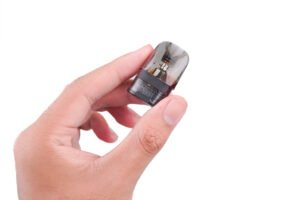
When researching a refillable pods vape, understanding pod capacity and coil resistance can help explain how different devices are designed and how their specifications relate to one another. These two characteristics are important parts of a vaping system because they influence e-liquid storage, electrical requirements, and compatibility between components.
Pod capacity describes how much e-liquid a pod can hold, while coil resistance measures the opposition a coil presents to electrical current. Although these specifications serve different purposes, they work together with battery capacity, device power, airflow, and coil construction to define a system’s technical characteristics.
Understanding these factors makes it easier to compare refillable vape systems using measurable specifications rather than relying on product names or appearance alone.
What Is Pod Capacity in a Refillable Vape System?
Pod capacity refers to the volume of e-liquid a pod is designed to contain. It is generally measured in millilitres (mL) and appears in the manufacturer’s product specifications.
For example, a pod with a capacity of 2 mL can hold up to 2 millilitres of e-liquid when filled according to the manufacturer’s instructions. Different refillable pods vape systems offer different capacities depending on their intended design and applicable market requirements.
Pod capacity is important because it describes the size of the e-liquid reservoir. It does not directly determine how much aerosol a device produces or how long a pod will last. Those characteristics also depend on coil resistance, power output, e-liquid formulation, and usage patterns.
The pod’s physical dimensions and internal construction also influence its capacity. Manufacturers must consider the reservoir, coil placement, airflow channels, and filling mechanism when designing a pod.
Understanding Coil Resistance
Coil resistance measures how strongly a coil opposes the flow of electrical current. It is expressed in ohms (Ω), a standard unit used in electrical engineering.
In a refillable pods vape system, the coil is the heating element that converts electrical energy into heat. This heat enables the device to produce an aerosol from the e-liquid.
Coil resistance is one of several specifications that determine how a coil operates within a device. Common pod-system coils can have different resistance ratings, depending on the model and intended power range.
Lower-resistance coils generally allow more current to flow at the same voltage. Higher-resistance coils generally allow less current at the same voltage. However, actual operation also depends on the device’s regulated power output and electrical design.
For this reason, coil resistance should always be considered alongside the manufacturer’s recommended wattage range, rather than treated as an independent measure of device performance.
How Pod Capacity Influences Device Specifications
Pod capacity affects several aspects of a refillable vape system’s design.
1. E-liquid storage
A pod’s capacity defines the volume of e-liquid it can accommodate. This is useful when comparing products with different reservoir sizes.
2. Physical dimensions
The reservoir occupies space within the pod, influencing its overall dimensions and the layout of internal components. Manufacturers balance storage volume with the device’s intended shape and construction.
3. Filling mechanism
Pod designs may use top-fill, side-fill, or other manufacturer-specific arrangements. The reservoir layout influences where the filling port can be positioned and how the pod is handled during refilling.
4. Relationship with coil design
The coil and its surrounding wicking material must be integrated into the pod’s structure. Capacity and coil placement therefore form part of the same design process.
For anyone researching a refillable pods vape, these details help explain why pods designed for different devices can vary in shape, capacity, and filling arrangements.
How Coil Resistance Influences Power Requirements
Coil resistance has a direct relationship with voltage and current in an electrical circuit. For a simplified circuit, Ohm’s law expresses this relationship as:
V = I × R
Here, V represents voltage, I represents current, and R represents resistance.
Electrical power can also be expressed as:
P = V × I
For a simple resistive load, these relationships can be combined to show how resistance relates to power at a given voltage.
In practical vaping devices, electronic regulation and device-specific operating limits influence the actual voltage, current, and power delivered to the coil. Therefore, theoretical electrical calculations do not replace the manufacturer’s specifications.
A refillable pods vape may support only certain coil resistance values or power ranges. Using compatible components helps ensure that the system operates within its intended electrical parameters.
The Relationship Between Coil Resistance and E-Liquid Consumption
Coil resistance can influence e-liquid consumption, but resistance alone does not determine how much e-liquid a device uses.
Power output, activation duration, airflow, coil surface area, wicking characteristics, and e-liquid properties also contribute to the amount of e-liquid converted into aerosol.
For example, two devices with different resistance ratings may operate at different power levels and use different coil structures. Their e-liquid consumption can consequently differ, even when their pods have the same capacity.
This is why a refillable pods vape should be evaluated as a complete system. Looking only at resistance or reservoir size provides limited information about how the device’s components work together.
How Pod Capacity and Coil Resistance Work Together
Pod capacity and coil resistance describe separate characteristics, but both contribute to the overall system specification.
Consider two hypothetical refillable pod systems. One uses a 2 mL pod with a 1.0 Ω coil, while another uses a 2 mL pod with a 0.6 Ω coil. Both have the same nominal e-liquid capacity, but their coils have different electrical resistance ratings.
These figures alone do not establish which system uses more e-liquid, produces more aerosol, or operates for a longer period. The manufacturer’s recommended power settings, coil construction, and other device specifications must also be considered.
Similarly, two pods with the same coil resistance can have different capacities because their reservoirs are designed differently.
When comparing products, it is useful to review pod capacity, coil resistance, recommended wattage, battery specifications, and compatibility information together.
What to Check When Comparing Refillable Vape Systems
A specification-based comparison can help clarify the differences between refillable pods vape products. Important details include:
- Pod capacity: The stated e-liquid volume in millilitres.
- Coil resistance: The coil’s nominal electrical resistance in ohms.
- Recommended power range: The operating wattage specified by the manufacturer, where applicable.
- Battery capacity: The battery’s rated capacity, usually expressed in milliampere-hours (mAh).
- E-liquid compatibility: The formulations and viscosity ranges supported by the device.
- Pod compatibility: Whether replacement pods and coils are designed for the particular model.
- Filling design: The position and type of filling mechanism.
- Manufacturer documentation: Instructions covering component compatibility, operation, and maintenance.
Reviewing these specifications together gives a more complete picture of a device’s design and intended operating conditions.
About Abc Vape
Abc Vape is a Canadian online vape shop offering products across categories such as vapes, e-cigarettes, e-liquids, disposable devices, pods, and accessories. Its listed brands include Allo, STLTH, Rocky Vapor, SMOK, and OXBAR. The retailer also advertises free delivery on qualifying orders above $100, subject to its current terms and conditions.
Its product categories provide a reference point for consumers researching different vaping devices and accessories. Manufacturer specifications and product descriptions can help readers identify pod capacities, coil resistance ratings, and compatible components when comparing available products.
Conclusion
Pod capacity and coil resistance are two important specifications for understanding refillable vape systems. Capacity describes the volume of e-liquid a pod can hold, while resistance describes an electrical characteristic of the heating coil.
Neither specification independently determines a device’s overall performance. Battery capacity, power regulation, coil construction, airflow, and e-liquid properties also influence how the system operates.
For anyone researching a refillable pods vape, comparing these characteristics together provides a clearer understanding of product design, electrical requirements, and component compatibility. Checking the manufacturer’s documentation remains the most reliable way to confirm the specifications and intended operating conditions of a particular device.